
Paper Cards vs Digital Cards vs Group Video Gifts: What's Actually Worth Sending in 2026?

Paper Cards vs Digital Cards vs Group Video Gifts: What's Actually Worth Sending in 2026?
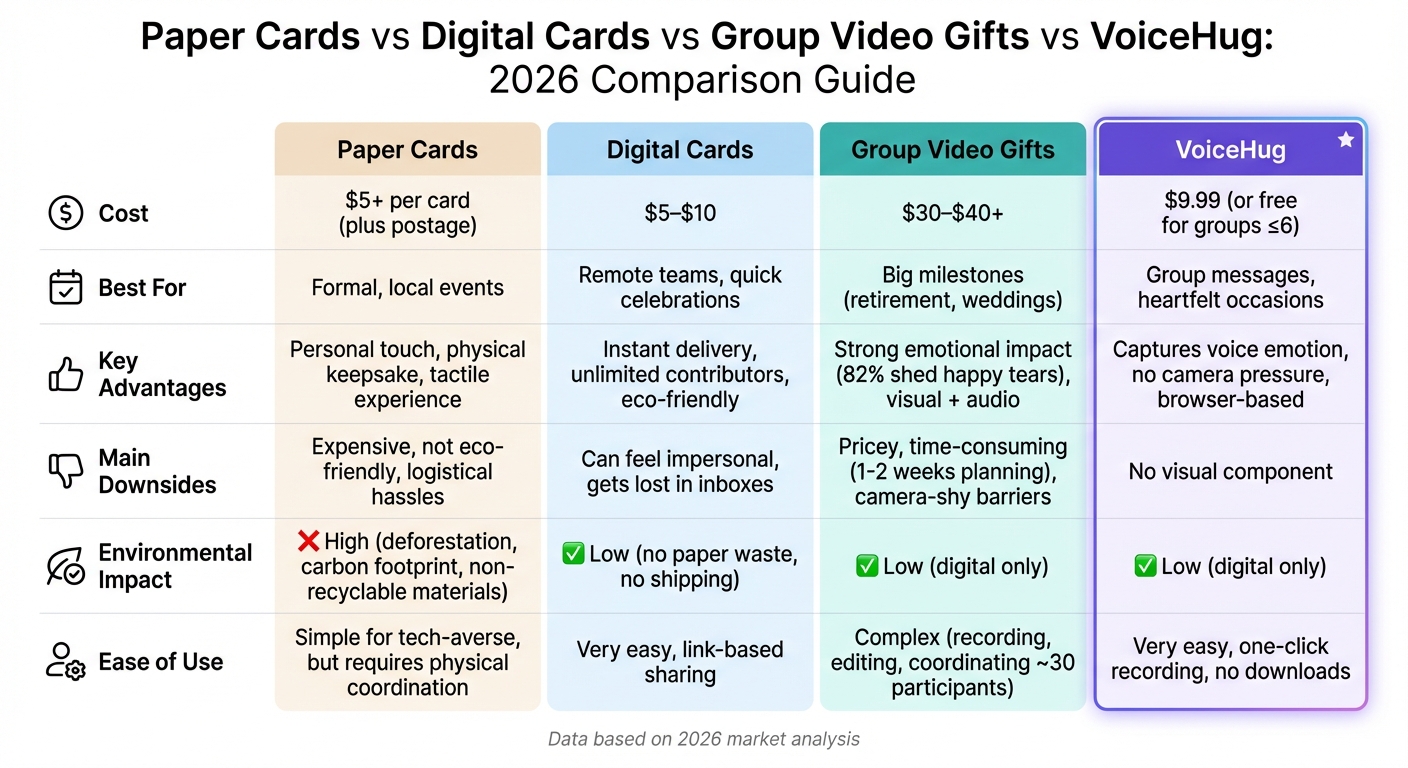
Choosing the right way to send a heartfelt message in 2026 depends on your priorities: emotional impact, ease, cost, and practicality. Here's a quick breakdown:
- Paper Cards: Great for small, personal occasions. They feel more personal but are expensive ($5+ per card, plus postage) and not eco-friendly. Best for local or formal events.
- Digital Cards: Affordable ($5–$10), instant, and easy for group contributions. They solve logistical issues but can feel less personal and often get lost in inboxes.
- Group Video Gifts: Perfect for major milestones. They offer a strong emotional connection but are pricey ($30–$40+) and require more effort to organize.
- VoiceHug (Audio Gifts): A newer option that’s affordable ($9.99 for unlimited contributors, free for small groups) and captures the warmth of voice messages without needing video or text. Simple, heartfelt, and stress-free.
Quick Comparison
| Format | Cost | Best For | Downsides |
|---|---|---|---|
| Paper Cards | $5+ per card | Formal, local events | Expensive, not eco-friendly |
| Digital Cards | $5–$10 | Remote teams, quick celebrations | Can feel impersonal, forgettable |
| Video Gifts | $30–$40+ | Big milestones (retirement, weddings) | Pricey, time-consuming to organize |
| VoiceHug | $9.99 (or free) | Group messages, heartfelt occasions | No visual component |
If you want something personal, affordable, and easy, VoiceHug is a standout choice in 2026.
Paper Cards: Classic but Outdated
What Paper Cards Do Well
Paper cards offer a personal, tactile experience that’s hard to match digitally. The feel of quality cardstock and the unique touch of handwriting create a connection that screens simply can’t replicate. As Miranda Lloyd, Staff Writer at Kudoboard, explains:
"The physical presence of a traditional card can have a sentimental value that's hard to replicate. Holding a card in your hands, seeing handwriting, and feeling the texture of the paper can make the gesture feel more thought-out and personal." [4]
These cards often become cherished keepsakes - displayed on mantels, added to scrapbooks, or tucked away in memory boxes. For those who aren’t as comfortable with technology, like grandparents or individuals who prefer to avoid digital clutter, paper cards are simple and accessible. No apps, accounts, or devices are needed.
However, while they shine in their sentimental value, paper cards come with some clear drawbacks in today’s fast-paced and eco-conscious world.
Where Paper Cards Fall Short
Paper cards can be a logistical headache, especially in group settings or remote environments. In an office, passing a card around for signatures can be time-consuming and messy - think coffee spills or cramped handwriting. Costs add up too, with standard cards priced around $4–$13 (not including postage) [5], and premium cards costing even more.
For remote or hybrid teams, the challenges multiply. Coordinating signatures across locations is nearly impossible. On top of that, paper cards aren't exactly eco-friendly. They contribute to deforestation, have a higher carbon footprint due to production and shipping, and many can’t be recycled because of glitter, foil, or other non-biodegradable decorations. Unlike digital options stored in inboxes or the cloud, physical cards can be easily lost, damaged, or discarded over time.
When to Send Paper Cards
Despite their challenges, paper cards still have their place. They’re perfect for formal, heartfelt occasions like weddings, sympathy messages, anniversaries, or thank-yous where the physical gesture holds extra meaning. They also work well for small, local groups where passing a card around is manageable or for recipients who treasure physical mementos and may not have access to digital tools.
That said, for workplace celebrations, large family gatherings, or last-minute needs, the practical issues often outweigh the sentimental charm of a paper card. In these cases, digital alternatives might be the smarter choice.
sbb-itb-42dca66
Digital Cards: Fast but Forgettable
What Digital Cards Offer
Digital cards solve many of the logistical headaches associated with traditional paper cards. They arrive instantly, regardless of location - whether you’re sending one from San Francisco to Sydney or just across town. Forget about running to the store, buying stamps, or waiting for mail delivery. Instead, you simply send a link via email or Slack, allowing contributors to add their messages at their own pace without the recipient seeing the process unfold [1][2].
As Ali and Julie, the co-founders of GroupTogether, explain:
"eCards are smarter, eco-friendly and built for the way we live and work now." [1]
Digital cards also eliminate space constraints. You can include as many messages, photos, and GIFs as you like - no more squeezing signatures into tiny spaces. Plus, they’re stored online indefinitely, so recipients can revisit them anytime [1].
From a cost perspective, they’re affordable. Most platforms charge between $4.99 and $8.99 for a single card with unlimited signers. For instance, GroupGreeting costs $4.99, Kudoboard’s entry-level "Lite Board" is $5.99 (for up to 20 posts), and GroupTogether charges $5.50 (or becomes free if the group gift collection exceeds $20) [3].
But while digital cards are undeniably convenient, they do come with some drawbacks.
What Digital Cards Lack
Despite their ease of use, digital cards can feel impersonal. Their quick and simple creation process may not convey the same thoughtfulness as a handwritten note [7].
The lack of a physical element is another downside. Without the tactile experience, digital cards miss out on the emotional resonance that comes from touch. Research shows that people form stronger impressions - 24% stronger, to be exact - when they can physically interact with materials. Additionally, 70% of consumers say physical mail feels more personal than digital communication [9].
Another issue? Digital cards often get buried in crowded inboxes, lost among newsletters, work emails, and spam. Even if they’re opened, they’re usually viewed once and forgotten - unlike paper cards, which are often displayed or kept as keepsakes. As Sean Huban from CPS Cards notes:
"A postcard gets read. A card gets kept." [9]
Finally, digital messages can feel brief and lack the emotional depth needed for meaningful connections. This can leave recipients feeling less engaged compared to other formats [8].
Digital Card Platforms
To address these challenges, several platforms aim to elevate the digital card experience.
GroupGreeting is a favorite in workplace settings, offering a nostalgic design with handwriting-style signatures. At $4.99 per card, it’s straightforward and simple. However, its flat scroll layout and limited customization options may not appeal to everyone [2][3].
Kudoboard takes a creative approach, acting like a virtual bulletin board where users can pin messages, photos, GIFs, and even videos. It’s great for large teams, offering a "Milestone Board" option for $19.99, which includes unlimited posts and slideshow features. Miranda Lloyd, a staff writer at Kudoboard, explains:
"Virtual group greeting cards have taken their place, offering a convenient, fun, and inclusive way for coworkers, families, and friends to come together and celebrate special occasions, no matter where everyone is located." [2]
GroupTogether stands out with its animated "unwrapping" feature and an AI-powered "Magic Message Writer" that helps users craft heartfelt messages. With over 1 million users and a 4.6-star rating on TrustPilot, it aims to bring a more personal touch to digital cards [10][3].
While these platforms are excellent for quick, budget-friendly celebrations or remote teams, they may not fully replace the emotional connection offered by more tangible alternatives.
Group Video Gifts: Heartfelt but Pricey
Why People Choose Video Gifts
Group video gifts have become a popular way to blend emotional resonance with a touch of practicality - though they often come with a higher price tag. These gifts deliver a personal connection that stands out, allowing recipients to see and hear heartfelt messages from loved ones. As VidDay aptly explains:
"Receiving a video message is a thousand times more personal than any paper card or ecard because the recipient can see you and hear you" [11].
The emotional impact is undeniable. According to Tribute.co, 82% of recipients shed happy tears when watching these video messages [12]. Unlike other gift options that may fade with time, video gifts become cherished keepsakes, often rewatched for years [11].
These gifts shine brightest during major milestones like retirements, milestone birthdays, and weddings - occasions where many people want to contribute. On average, successful group video projects include around 30 participants, each submitting their own clip to form a cohesive montage [12]. Some platforms even offer physical video books featuring built-in 7-inch LCD screens, transforming the digital gift into a tangible memento worthy of a coffee table display [12].
While undeniably meaningful, video gifts do come with their own set of hurdles.
The Downsides of Video Gifts
Creating a group video gift isn't as simple as signing a digital card. It requires contributors to record their clips, organizers to coordinate submissions, and platforms to assemble everything into a polished final product. To ensure smooth execution, it's best to start planning one to two weeks in advance [12].
Cost is another consideration. While digital cards typically cost between $4.99 and $8.99, video gift platforms often charge $30 to $40 or more [11]. For families or teams on a tight budget, this price difference can be significant.
Participation can also be a challenge. Not everyone feels comfortable on camera, which might discourage some from contributing compared to text-based options [2]. Additionally, overly rehearsed clips can sometimes come across as less genuine, detracting from the emotional authenticity.
Comparing Kudoboard, VidDay, and Tribute.co
Here’s a quick look at how three popular platforms stack up for creating group video gifts:
| Tool | Strengths | Weaknesses | Pricing |
|---|---|---|---|
| Kudoboard | Easy collaboration; supports GIFs, images, and short clips; "slideshow" mode for parties [2] | May feel impersonal and overly casual [2] | $5–$10+ |
| VidDay | Polished video editing; automated montage creation; user-friendly for non-tech-savvy contributors [11] | Higher cost for group features; time-intensive to collect clips [11] | $30+ |
| Tribute.co | High emotional impact; Concierge editing available; offers physical video book add-ons [12] | Most expensive; complex setup for large groups; requires payment to publish [12] | $40+ |
VidDay stands out for its ease of use and polished results, making it a great choice for family celebrations. The platform handles the technical side, ensuring a seamless final product [11].
Tribute.co, on the other hand, is the go-to option for those looking to create something deeply personal and meaningful. As Miranda Lloyd highlights:
"Tribute is perfect for creating video tributes with contributions from multiple participants... highly personalized and ideal for emotional occasions" [2].
However, this premium experience comes at a premium price, often exceeding $40 - especially when opting for their Concierge service or physical video book extras [12].
How These Options Compare in 2026
Emotional Connection and Personalization
Group video gifts bring together real-time audio and visuals, packing a strong emotional punch. Digital cards, while not as immersive, offer a good level of personalization. Thanks to advancements in AI, platforms now help users craft thoughtful messages and include extras like GIFs, photos, and even audio clips to make the experience more engaging[1][3]. On the other hand, paper cards still hold a special place in many hearts due to the personal touch of handwriting and their physical presence, though they are limited by the space available.
As GroupTogether aptly notes, "Group cards aren't just about collecting messages. They're about how those messages land"[3]. By 2026, digital platforms have stepped up their game, using AI-driven personalization, dynamic animations, and integrated audio to bridge the emotional gap between digital and traditional methods.
These emotional contrasts lay the groundwork for understanding how each option performs in terms of real-world influence and cost.
Environmental Footprint
When it comes to eco-consciousness, digital cards and group video gifts lead the pack. They avoid paper waste, eliminate the need for inks, and cut down on carbon emissions tied to traditional mail delivery[13][14]. In contrast, paper cards contribute to deforestation and often include materials like foils or laminates that can't be recycled, eventually ending up in landfills[14].
This shift toward greener options isn't just a matter of convenience - it's part of a broader societal trend. As Sendwishonline puts it, "Sustainability is perhaps one of the most compelling arguments in the digital greeting cards versus paper debate... it's becoming a cultural movement"[14]. With sustainability now a shared value, choosing eco-friendly options reflects a commitment to thoughtful celebrations. While 54% of Americans still mail physical cards, that number is steadily dropping as people reserve paper cards for only the most meaningful occasions[15].
Price Breakdown
Cost remains a key factor when comparing these options. Here's how they stack up:
| Format | Typical Cost | What You Get |
|---|---|---|
| Paper Cards | $5.00+ per card (plus postage) | Single handwritten message, physical keepsake |
| Digital Cards | Free to $10.00 | Unlimited contributors, multimedia options, instant delivery |
| Group Video Gifts | $30.00–$40.00+ | Professional video montage, editing services, premium features |
Digital cards offer the best bang for your buck. For instance, GroupTogether charges $5.50 for unlimited messages and contributors[1], GroupGreeting costs $4.99 per card[3], and Kudoboard prices range from $5.99 to $19.99 depending on features[3]. Paper cards, on the other hand, quickly become more expensive when you factor in postage. Group video gifts are the priciest option, often starting at $30 for basic packages[2].
Ron Wilson, a former bank executive, highlighted the financial benefits of going digital: "I used to mail and receive over 100 cards a year, but last year I received four... Now, I send an email to over 500 people. [It] saves significant money on cards and postage"[16].
Why VoiceHug Works Better
While earlier comparisons explored the pros and cons of paper, digital, and video gifts, VoiceHug takes things a step further. This audio-first platform captures the warmth and authenticity of voices without the stress of being on camera or the constraints of text-based messages.
Audio Captures Real Emotion
Voice-only communication brings out emotional depth by preserving tone, pauses, and inflections that text or even video might miss[17][18]. With VoiceHug, contributors can record messages without worrying about their appearance or lighting. As Pamela Rutledge, PhD, a media psychologist, explains:
"When we focus only on voice, we become more attuned to subtle vocal cues, leading to deeper, more engaged conversations."[17]
Unlike video calls, which can overload the brain by requiring you to process both visual and auditory information while managing self-presentation, audio communication keeps things simple. Research shows that users share more personal stories and heartfelt messages on VoiceHug than on video platforms[19]. The result? Messages feel like genuine conversations rather than rehearsed performances.
And it’s not just about emotional resonance - VoiceHug also keeps things budget-friendly.
Lower Cost, No Subscriptions
VoiceHug is free for small groups (up to six people) and charges a one-time fee of $9.99 for unlimited contributors. Compare that to video platforms: a 10-minute VidDay montage can cost around $30, while other video services range from $35 to $99 per project[19]. Even Kudoboard’s Milestone Board, which allows unlimited posts, costs $19.99[3].
Another plus? VoiceHug is entirely browser-based. Contributors can record their messages by simply clicking a link - no downloads or account setups required. Recipients can listen through a shared link or download the audio file with ease.
These features make it the perfect choice for heartfelt, practical group gifts in 2026.
Built for Group Gifts
VoiceHug doesn’t just keep costs low; it simplifies the entire process. The platform organizes contributors, sends reminders, and compiles messages into a polished audio montage. It’s perfect for occasions like birthdays, retirements, or office farewells - any event that calls for heartfelt support. Plus, without the pressure of being on camera, participation rates are often higher, as even camera-shy individuals feel comfortable leaving a voice message[19].
As Moé Weisensee, co-founder of VoiceHug, puts it:
"Many of [the most intimate conversations] probably happened over the phone, where you could focus entirely on connection rather than presentation. That's what VoiceHug captures."[19]
Conclusion: Which Format to Choose in 2026
Deciding on the right format in 2026 depends on your group size, budget, and how much connection you want to create.
Paper cards work well for small, in-person gatherings. They have a nostalgic charm and make for lovely keepsakes, but they’re not ideal for remote teams and come with a higher environmental impact[4].
Digital cards are perfect for large or distributed groups. They’re convenient, with costs ranging from free to about $19.99 for unlimited contributors[3][6]. They’re fast, inclusive, and a greener option. However, a plain digital card can sometimes feel impersonal, especially if it’s just a long scroll of text without a unique design[1][3].
Group video gifts are the go-to for major milestones like retirements or big birthdays. They pack an emotional punch but require a lot of effort - collecting and editing clips takes time, and not everyone is comfortable being on camera[2].
For a more personal and affordable option, VoiceHug stands out. It captures the heartfelt sincerity of voice messages without the pressure of being on camera or the impersonal tone of text. At just $9.99 for unlimited contributors - and free for groups of six or fewer - it’s a cost-effective way to create something meaningful. There’s no need for downloads or subscriptions; simply share a link to gather voice messages. VoiceHug blends the ease of digital tools with the warmth of personal connection.
When choosing a format, focus on what feels authentic and practical. If you want something that’s heartfelt but low-stress and affordable, audio gifts offer a memorable way to connect - without the corporate vibe of GIF-heavy cards or the expense and hassle of video production.
FAQs
Which option feels most personal in 2026?
In 2026, digital and group video gifts have become the go-to choice for creating meaningful connections, especially when they include audio. While traditional paper cards hold a certain nostalgic charm, digital cards offer something paper can't: high customization and the ability to deliver an instant emotional punch.
Group video gifts, particularly those featuring heartfelt audio messages - like the ones from VoiceHug - take things to the next level. These formats allow for deeper emotional connections, often feeling more personal and intimate than plain text or video alone.
Audio-first formats, in particular, shine as the most personal way to express genuine emotion. They capture the tone, warmth, and authenticity of the sender's voice, making them stand out in a world that's increasingly digital.
What’s the easiest choice for a remote group?
When it comes to remote group greetings in 2026, the simplest and most effective choice is a digital platform designed to encourage participation and ease of use. Options like Kudoboard, VidDay, and Tribute.co are all great tools, but Kudoboard takes the lead. Its collaborative features and support for multimedia make it a standout. With Kudoboard, multiple people can easily contribute to a single digital card, making it perfect for remote teams looking for an easy and inclusive way to celebrate together.
How do I choose between audio and video?
When choosing between audio and video for heartfelt messages or gifts, audio often creates a deeper sense of intimacy and emotional connection. Its flexibility is a big plus - you can listen while doing other things - and it’s also simpler to produce and edit. While video provides visual appeal, studies suggest that audio can trigger stronger emotional reactions, helping to build closer bonds. For a personal, budget-friendly option that feels less staged, audio-first formats like VoiceHug are often a great choice.