Guide · updated 2026-10-17
Gifts for someone who can't read cards anymore
Cards depend on reading. If someone has lost much of their sight, had a stroke, is in intensive care, is foggy from treatment or lives with dementia, a pile of cards can be a reminder of what they cannot do. Here are gifts that do not need reading, with an honest view of each.
Short version: Choose sound, touch and company: audiobooks, music, photos of familiar faces, visits and calls, and a recording of the voices of the people who would have written. Ask someone close to them what they can manage.
Message to send
Mum can't read cards any more, so instead of a card we're making a recording of everyone's voices that she can listen to. Could you record a minute by Sunday? Start with your name, then tell her something you're looking forward to or a memory of her.
Change the names and dates, then paste it into your group chat or email.
Who this is for
People who cannot read comfortably for different reasons need different things. With vision loss such as macular degeneration, large print or audio often work. After a stroke, reading and language may be affected. In intensive care, people can be too ill to focus on text. During chemotherapy some people describe a fog that makes reading hard. With dementia, reading often fades before the ability to enjoy a familiar voice. Ask a family member or carer what suits the person now.
Ideas that do not need reading
Audiobooks. Services such as Audible and Bookshare, and in the US the National Library Service, are suggested by VisionAware's gift-giving page. Pick something they already know and like.
Music. A playlist of songs from their younger years. For dementia, ask the family which songs they connect with.
Talking or large-print items. VisionAware lists talking clocks and watches, talking health devices and tactile items; the American Foundation for the Blind also links gift guides. Ask the person or their family which are useful before buying.
Photo frames with familiar faces, large and with names added. They suit people who can still see but cannot read.
Your time. A visit, a regular phone call, or help with errands, mail or meals. VisionAware also suggests offering help like this.
A recording of familiar voices. Everyone who would have signed the card records a short message, and the finished recording is one MP3 the person, or whoever looks after them, can play.
How a group recording works
Ask each person to say their name first, then something short and warm: a memory, a bit of news, what they are looking forward to. One minute is plenty. The organizer sends one link, people record on their phones without an app, and the result is one recording with a chapter for each voice, so the listener can play one person at a time.
The same idea fits different situations. See voice messages for someone with dementia, what to send someone in hospice and get well messages from a group. In intensive care, ask the nurses before playing anything aloud.
What usually goes wrong
- Gifts that need more skill than they can manage. A new gadget with many buttons can be hard for someone who is ill or has dementia. Choose simple.
- Assuming the problem. Ask family what the person can still do before you buy anything.
- Too much at once. A long recording can be tiring. They can play a few voices at a time.
- Cards still arrive. Large-print cards from the family are fine if someone can read them aloud to them.
The same job with VoiceHug
VoiceHug turns the card into a recording: one link for the group, a chapter for each voice, and a player the person or their carer can start with one tap.
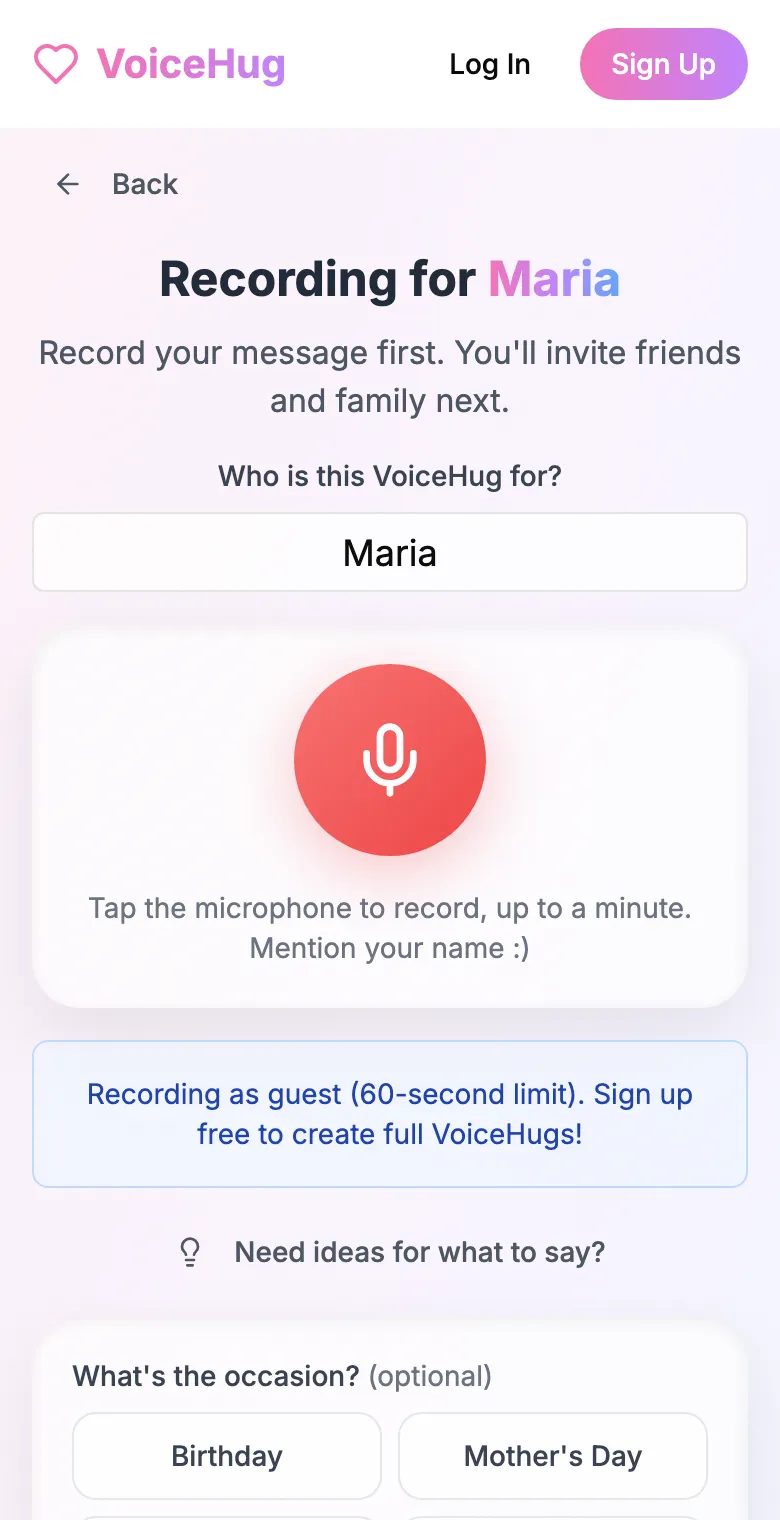
1. Record your own message
Say who it is for and record first, so everyone hears how it sounds.
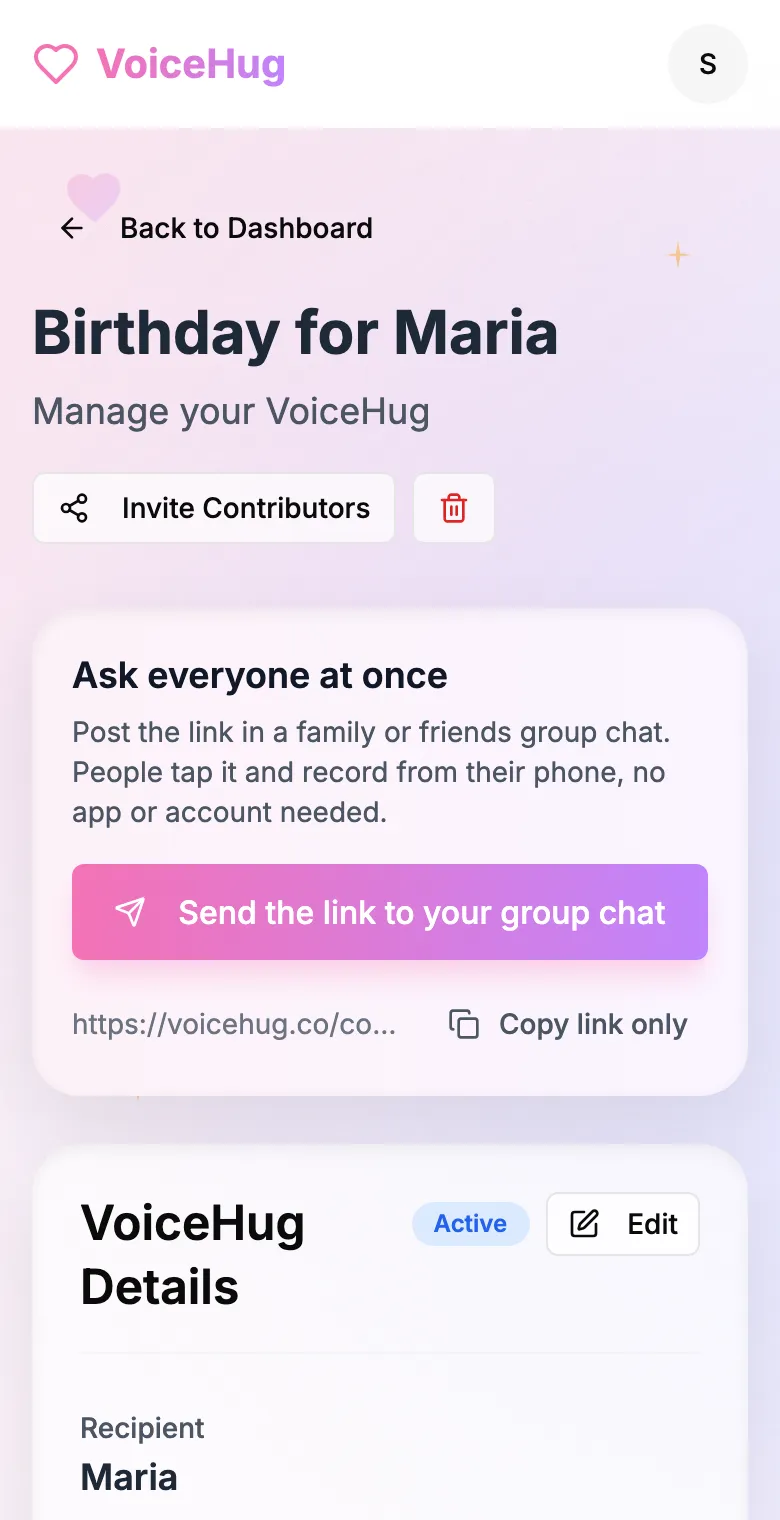
2. Send one link to the group
Post it in the family or friends group chat, or send the WhatsApp invite. You see who has recorded and can remind anyone invited by email.
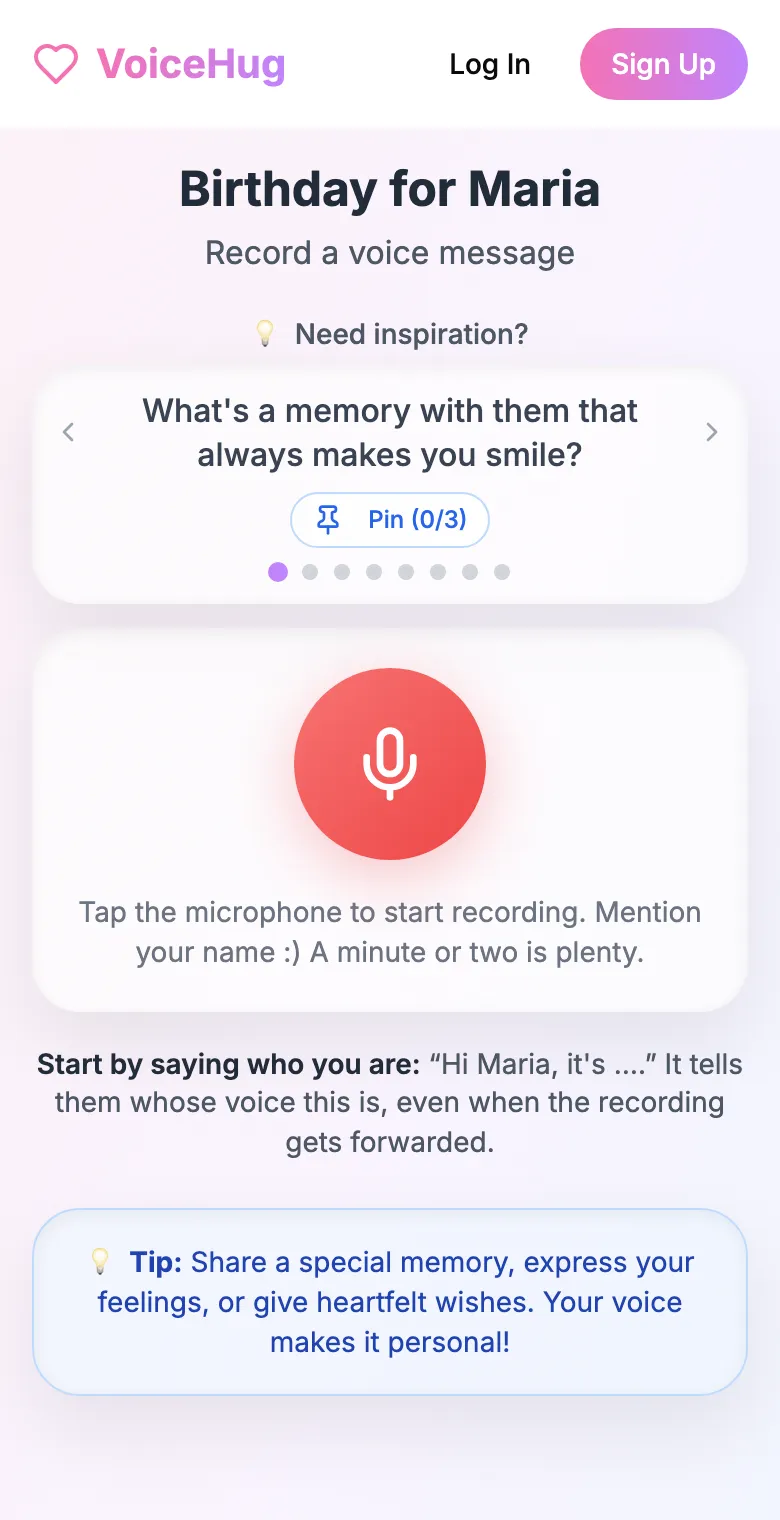
3. Each person records on their phone
They open the link and tap the microphone, with prompts if they need ideas. No app, no account. They can also send a WhatsApp voice note.
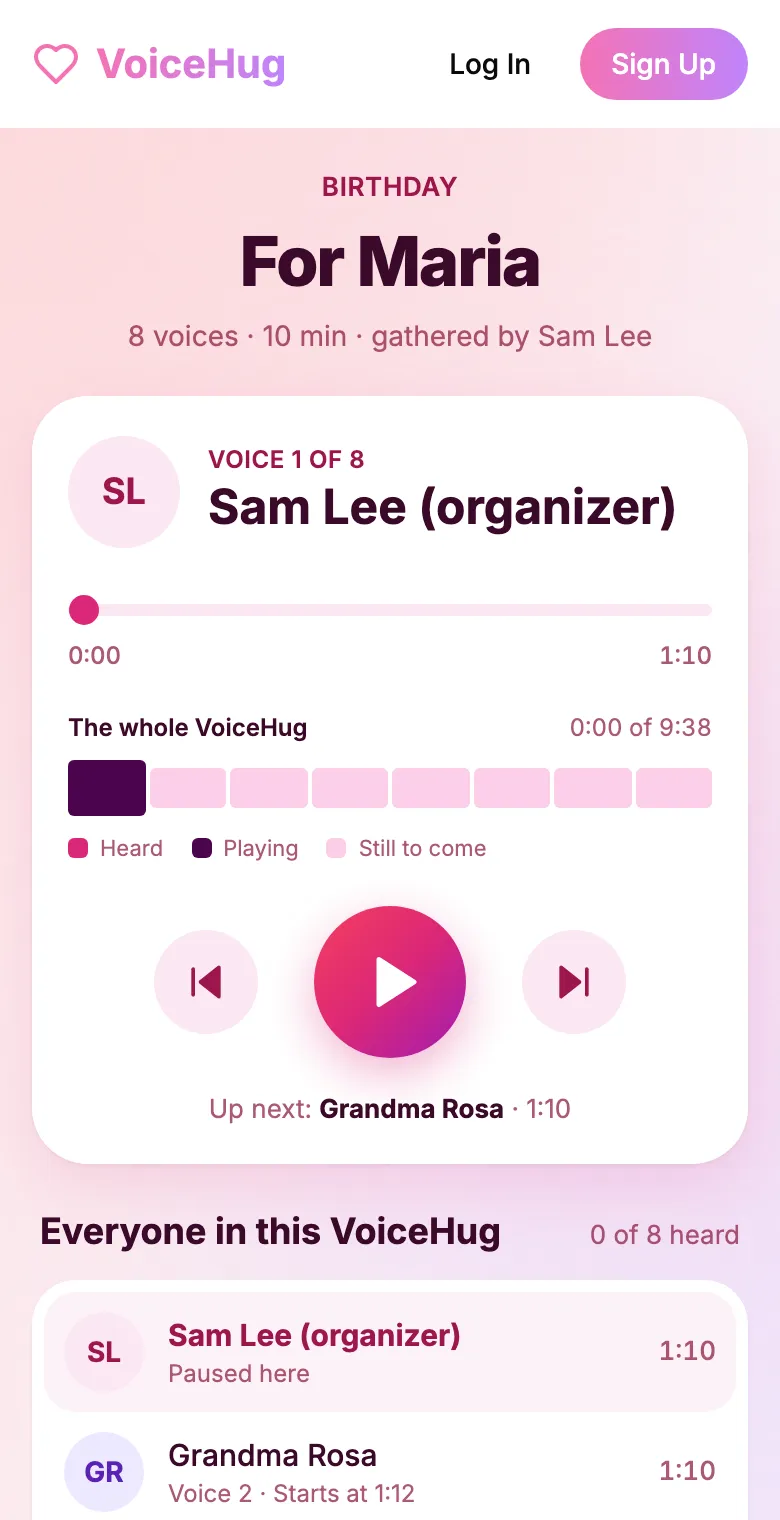
4. They get one recording
VoiceHug levels every voice, puts a short pause between them and makes one MP3 with a chapter for each person, plus a gift page to send.
Free for you and up to 5 others. $9.99 once for a larger group.
Questions
- What can you give someone who can't read anymore?
- Audiobooks, music, large-print or talking items, photos of familiar faces, time with you, and a recording of voices of the people who love them.
- Is a voice recording good for someone with poor eyesight?
- It can be, because they only need to listen. Someone else can also start it for them, and the chapter list lets them pick a voice.
- What should a group record for them?
- Each person says their name, then one short memory, piece of news or something they look forward to. About a minute each.
- How much does it cost?
- Free for you plus up to 5 others (6 people). For a larger group it is a one-time $9.99, with no limit on how many people record. Contributors never pay.