Guide · updated 2026-10-17
What to send someone in hospice when you are far away
When someone is in hospice and you cannot get to them, a card is hard to read and a phone call may be too tiring. A recording of the voices of the people who love them can be played at the bedside by whoever is there, at the volume they want, as often as they like.
Short version: Collect short recordings from everyone who cannot be there, ask them to say their name and speak as they would on a visit, and send the link or the MP3 to the family or staff member at the bedside.
Message to send
Our friend Ray is in hospice and visits are limited, so we're putting together a recording of voices for his room. Could you record a minute or two by Wednesday? Start with your name, then speak to him as you would on a visit: something you remember together, what you're grateful for, or just that you're thinking of him. There is no need to say goodbye or to say anything difficult.
Change the names and dates, then paste it into your group chat or email.
Example (made up, not a real customer)
Example: how a VoiceHug for someone in hospice could work
Say a family of eight lives in three countries, and their grandmother has moved to hospice care. Her daughter, who is with her, invites the other seven by email and a group chat, and gives them three days.
She asks each person for one or two minutes: say your name first, then a memory you share or something you are grateful for, spoken the way you would at her bedside. She tells them there is no need to say goodbye.
When the recording is ready she checks with the nurse that the room is quiet enough, and plays it at a low volume from a phone on the bedside table. The chapters could look like this:
- Helen (organizer)
- David
- Sophie and Ben
- Aunt Margaret
- Joan
- Chidi Okafor
Why a recording suits a hospice room
Reading can be too tiring, and visitors are often limited to a few people at a time. A recording needs nothing from the person: someone presses play, and it can be stopped, started and turned up or down. The person can listen as much as they like, at whatever volume they need.
What to ask people to say
Start with your name and who you are to them.
Speak the way you would sitting beside them. A memory, something you are grateful for, or what they taught you.
One to two minutes is enough. Slower is better than longer.
Say as much or as little as feels right. Nobody has to say goodbye, and nobody has to hold back if they want to say they love them.
Playing it at the bedside
Check with the family and with the nurses first. They know how the person is, whether they would welcome it, and what suits the room.
Play it from a phone, tablet or small speaker. The finished recording is an MP3, so it also works on an old phone left in the room, if staff are happy with that.
Whoever is there presses play. Because each voice is a chapter, they can choose one person or skip to the next.
Use headphones or a low volume if anyone else shares the room, and ask staff first.
Other things you can send
A recording does not replace a call or a visit if either is possible. Photos with names written on the back, a favourite blanket or a playlist of songs they love also work well. If you do not know what is allowed, ask the hospice team.
What usually goes wrong
- Time. Hospice stays can be short. Give people a day or two, and send what you have, adding a second recording later if you can.
- Messages that are hard to listen to for the family at the bedside. Let people say what they feel, but ask for warmth over detail.
- Surprising the family. Check with them first rather than sending the link cold.
- Rooms with others in them. Ask staff before playing audio out loud.
The same job with VoiceHug
VoiceHug takes the recordings from a link, with no app or account, and gives you one MP3 with the name of each voice. A family member can send it to the bedside in minutes.
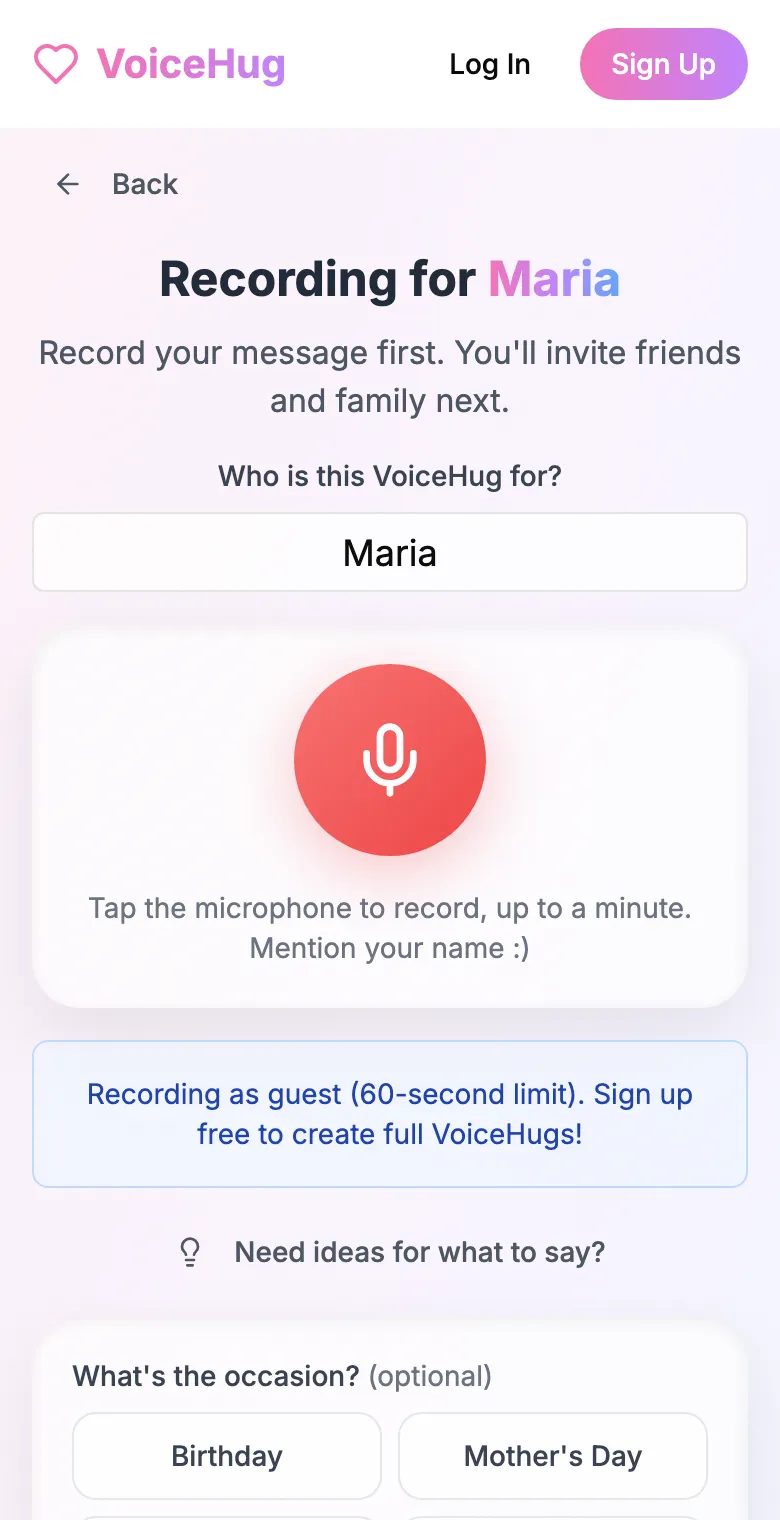
1. Record your own message
Say who it is for and record first, so everyone hears how it sounds.
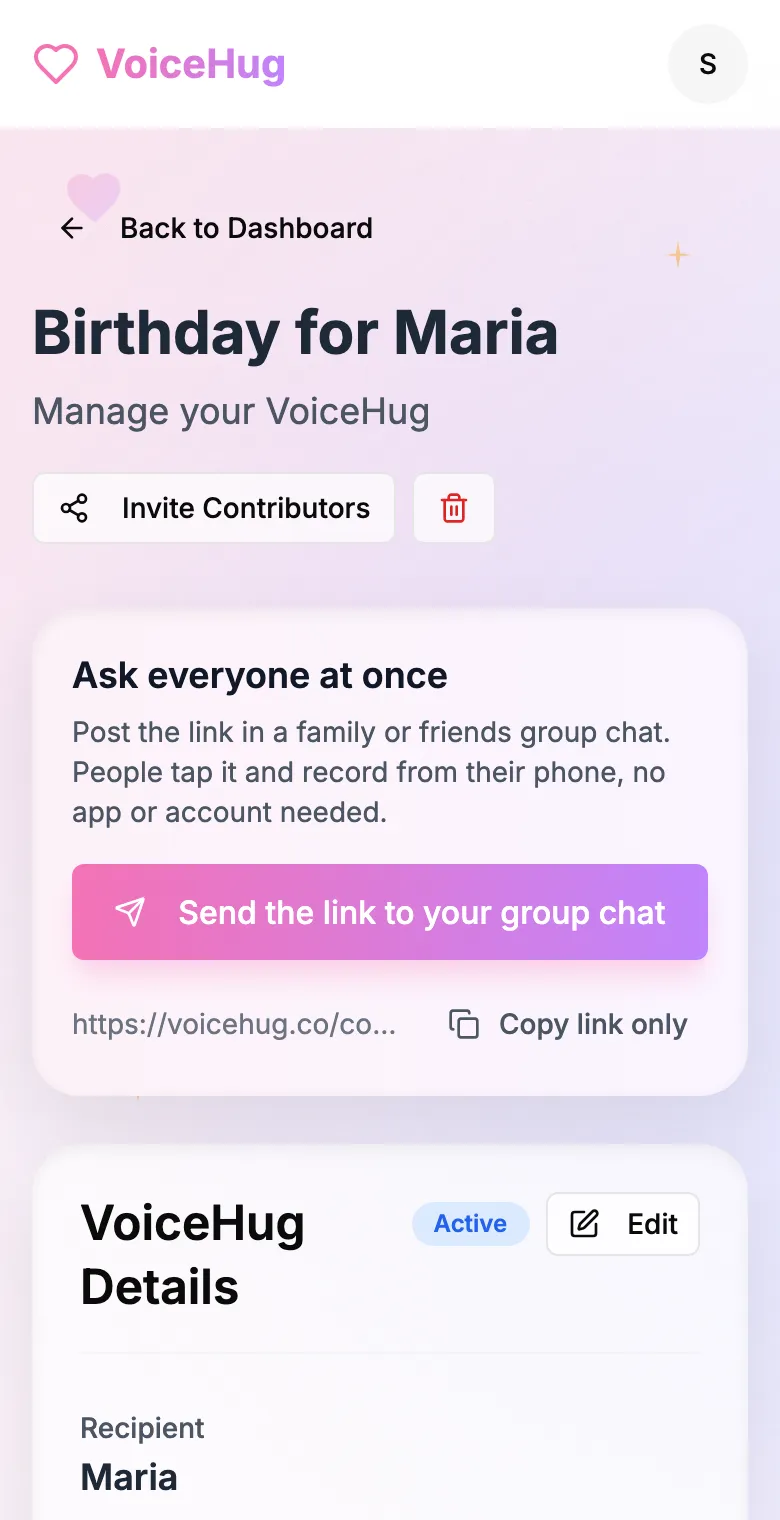
2. Send one link to the group
Post it in the family or friends group chat, or send the WhatsApp invite. You see who has recorded and can remind anyone invited by email.
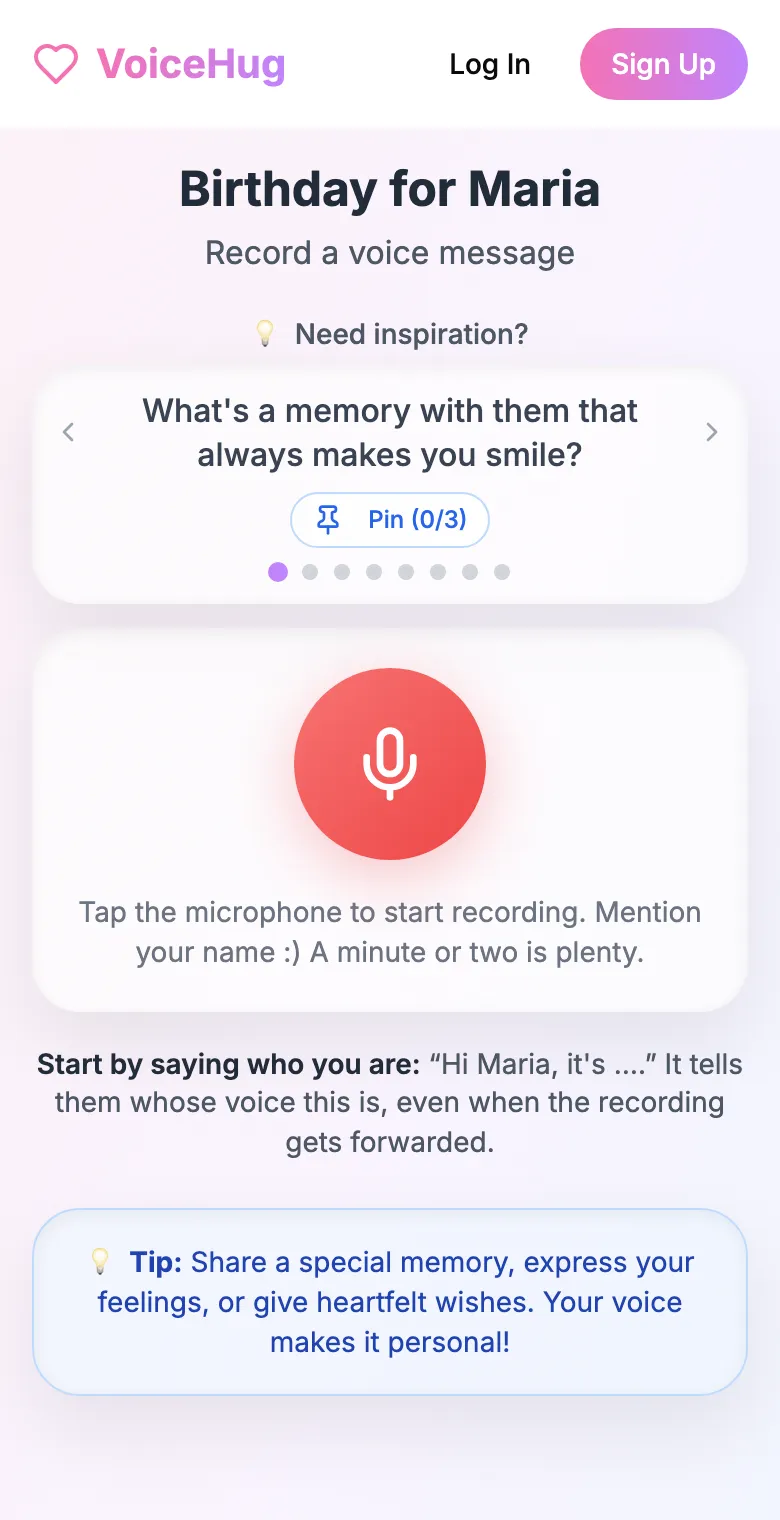
3. Each person records on their phone
They open the link and tap the microphone, with prompts if they need ideas. No app, no account. They can also send a WhatsApp voice note.
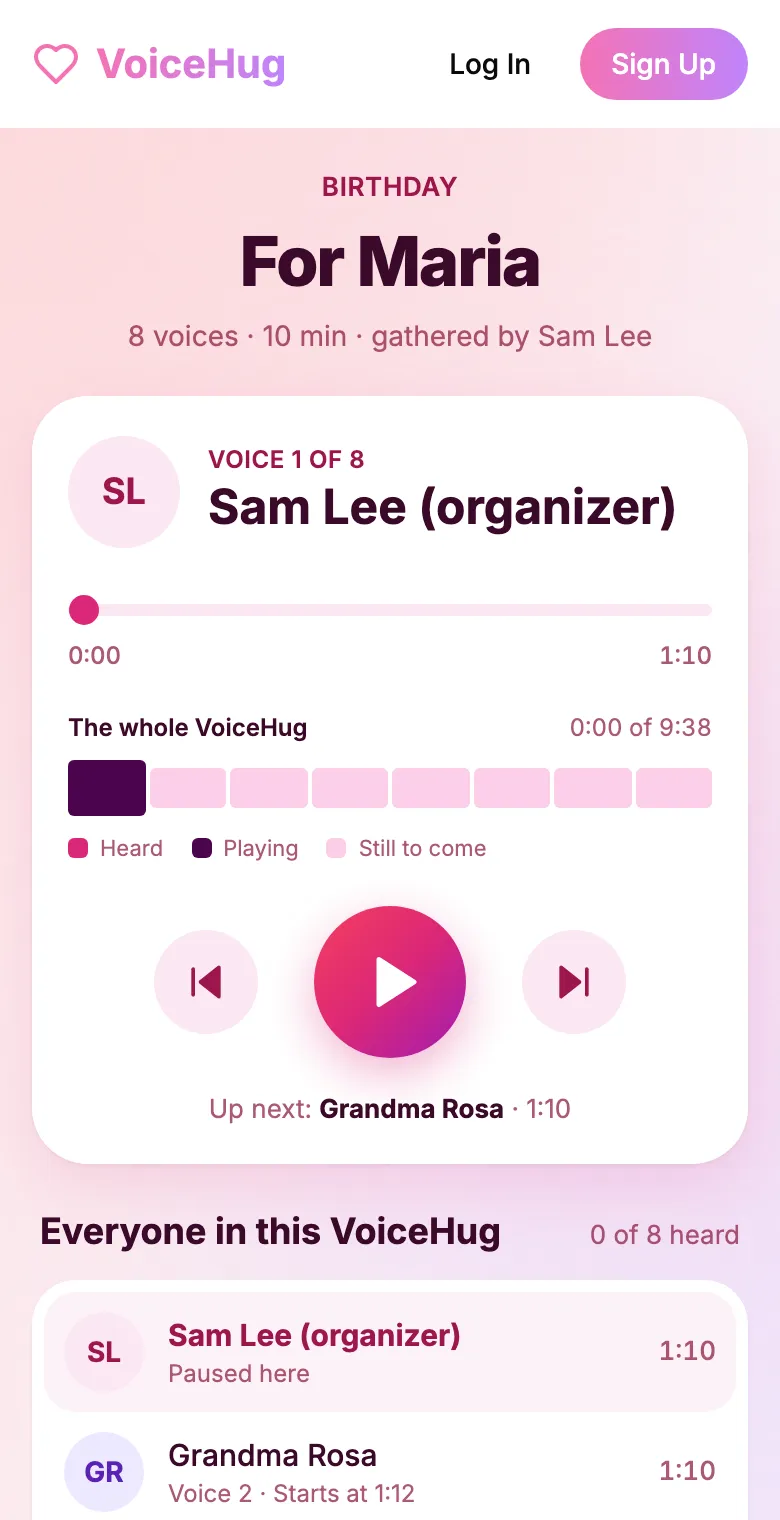
4. They get one recording
VoiceHug levels every voice, puts a short pause between them and makes one MP3 with a chapter for each person, plus a gift page to send.
Free for you and up to 5 others. $9.99 once for a larger group.
Questions
- What do you send someone in hospice from far away?
- Photos, a letter someone can read aloud, a playlist, and a recording of the voices of people who love them are all options. A recording can be played at any volume by whoever is with them, so it suits someone too tired to read.
- What do you say in a message to someone in hospice?
- Your name, a memory you share or what they mean to you, spoken the way you would sit beside them. Keep it to a minute or two.
- Do people have to say goodbye?
- No. Say what feels right. Many people choose memories and thanks.
- How do staff or family play it?
- Send them the gift link or the MP3. It plays on a phone, tablet or speaker, and the chapters let them pick a voice.
- How much does it cost?
- Free for you plus up to 5 others (6 people). For a larger group it is a one-time $9.99, with no limit on how many people record. Contributors never pay.