Guide · updated 2026-10-17
Voice messages for someone with dementia: what families can record
If someone you love has dementia and can no longer follow a letter or a card, a recording of familiar voices is something they can take in without reading. It is worth doing carefully, because the research on this is thin and not every person reacts well.
Short version: Ask each person for under a minute: their name, how they know the person, and one short, happy, familiar memory in a calm voice. Play a short clip first, with someone beside them, and stop if it upsets them.
Message to send
We're making a short recording of familiar voices for Mum, who finds reading hard now. Could you record about a minute? Start with your name and how you know her, then say something simple and warm: a happy memory you share, or what you're doing this week. Please speak slowly and keep it gentle, and don't quiz her or remind her of things she may not remember.
Change the names and dates, then paste it into your group chat or email.
Example (made up, not a real customer)
Example: how a VoiceHug for a parent with dementia could work
Say a daughter wants something her father can listen to in the care home, where he no longer follows a book or a card. She invites his two brothers, her children, a neighbour and an old colleague, nine people in all.
She asks each person for under a minute: their name and how he knows them, then one short memory from the years he remembers best, in a calm voice. She records hers first so the others hear the tone.
She listens to the finished recording alone, then plays him only the first two voices with headphones, a carer next to him, and sees how he reacts before playing more. The chapters in the finished recording could look like this:
- Anna (organizer)
- Tom
- Peter
- Max and Lily
- Mrs Rao
- Colin
What the research does and does not show
Recordings of a familiar voice have been tried in dementia care under the name simulated presence therapy. The Australian dementia-care hub ARIIA summarises the evidence: a review could not say whether it works, mainly because the studies were few, small and of low quality, and some people with dementia became more agitated by the recorded message rather than less.
So this guide does not claim that a recording helps with dementia. It is a gift: voices the person knows, which they can hear without reading. Treat it as something to offer gently and withdraw if it does not suit them. ARIIA suggests choosing people carefully, watching their responses closely, and keeping the messages short and reassuring.
What to ask people to say
Say your name and who you are to them first, every time ("Hello Dad, it's Anna, your daughter"). Do not ask "do you remember me?".
Keep it to a minute or less. Short clips are easier to follow than long ones.
Talk about things from the years they remember best: a holiday, a song, a family meal, a shared job. Use simple sentences and a slow, warm voice.
Say what you are doing now in a sentence or two, and that you are thinking of them.
Avoid questions, corrections, sad news and anything that depends on them remembering recent events.
How to play it
Whoever looks after them can press play whenever it suits them. The finished recording is an MP3 you can download, so it can be kept on a tablet or phone at the care home.
Listen to the whole recording yourself first, so nothing in it will surprise or upset them.
Choose a quiet time of day when they are usually calm, with the television off.
Play one or two voices, not all of them. The gift page lists each voice, so you can pick one person at a time.
Sit next to them, or ask the carer to. Headphones help if they tolerate them; otherwise use a phone or speaker at a low volume.
Watch their face and body. If they look calm or interested, carry on. If they look confused, distressed or restless, stop and try another day or not at all.
Other ideas for the same person
A recording is one option among several. If reading is the problem, see gifts for someone who can't read cards anymore.
What usually goes wrong
- Voices that make them anxious. A voice of someone who has died, or a person they no longer recognise, can confuse some people. Leave those out unless you are sure.
- Too long. A twenty-minute recording is a lot to follow. Play a minute or two at a time.
- Messages that quiz them. "Do you remember when…?" can feel like a test. Say the memory yourself instead.
- Playing it to a group. A room of people and a recording can be overwhelming. One-to-one is calmer.
The same job with VoiceHug
VoiceHug collects the voices from one link, with no app, and makes one recording with a chapter for each person, so a carer can play just one voice at a time.
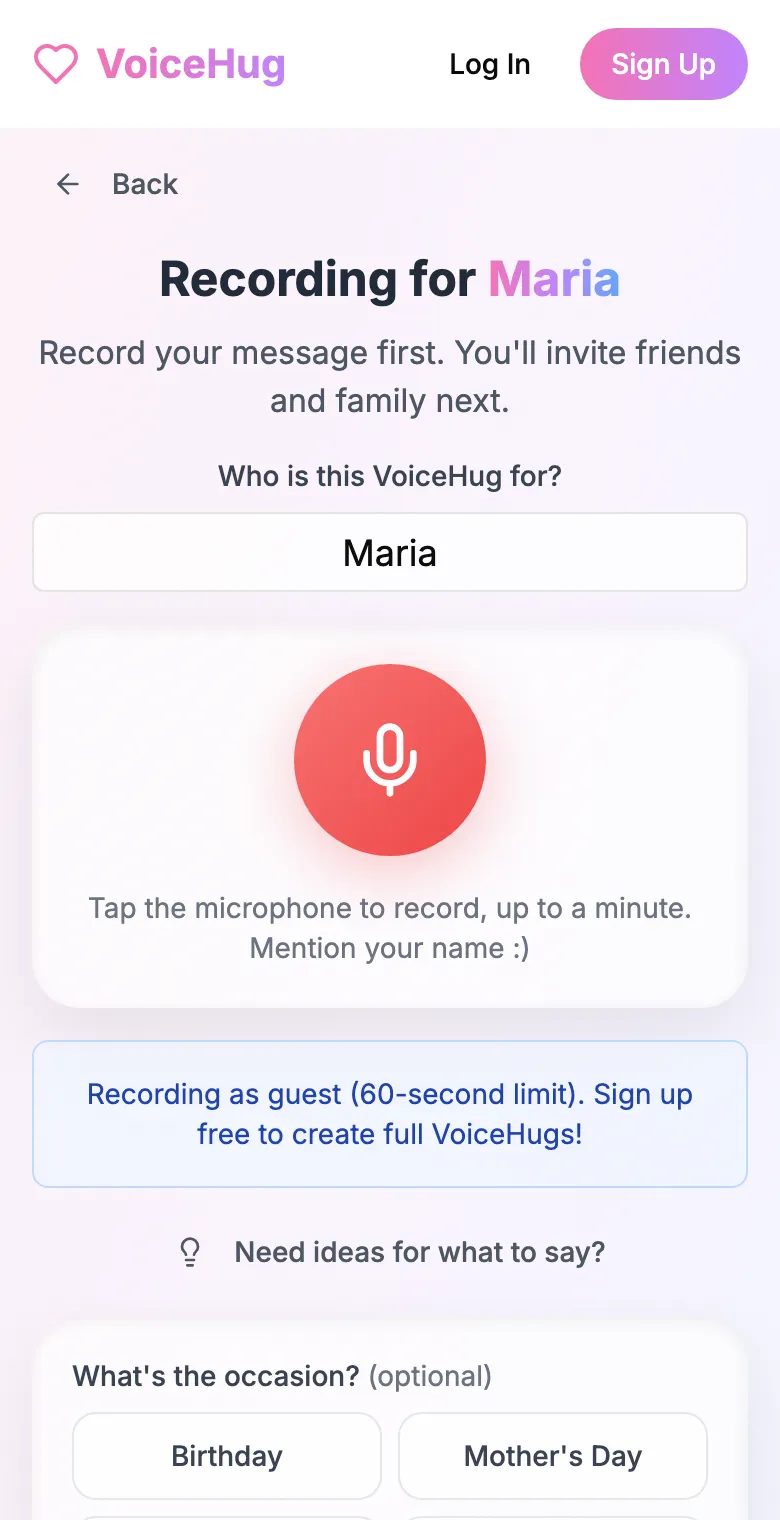
1. Record your own message
Say who it is for and record first, so everyone hears how it sounds.
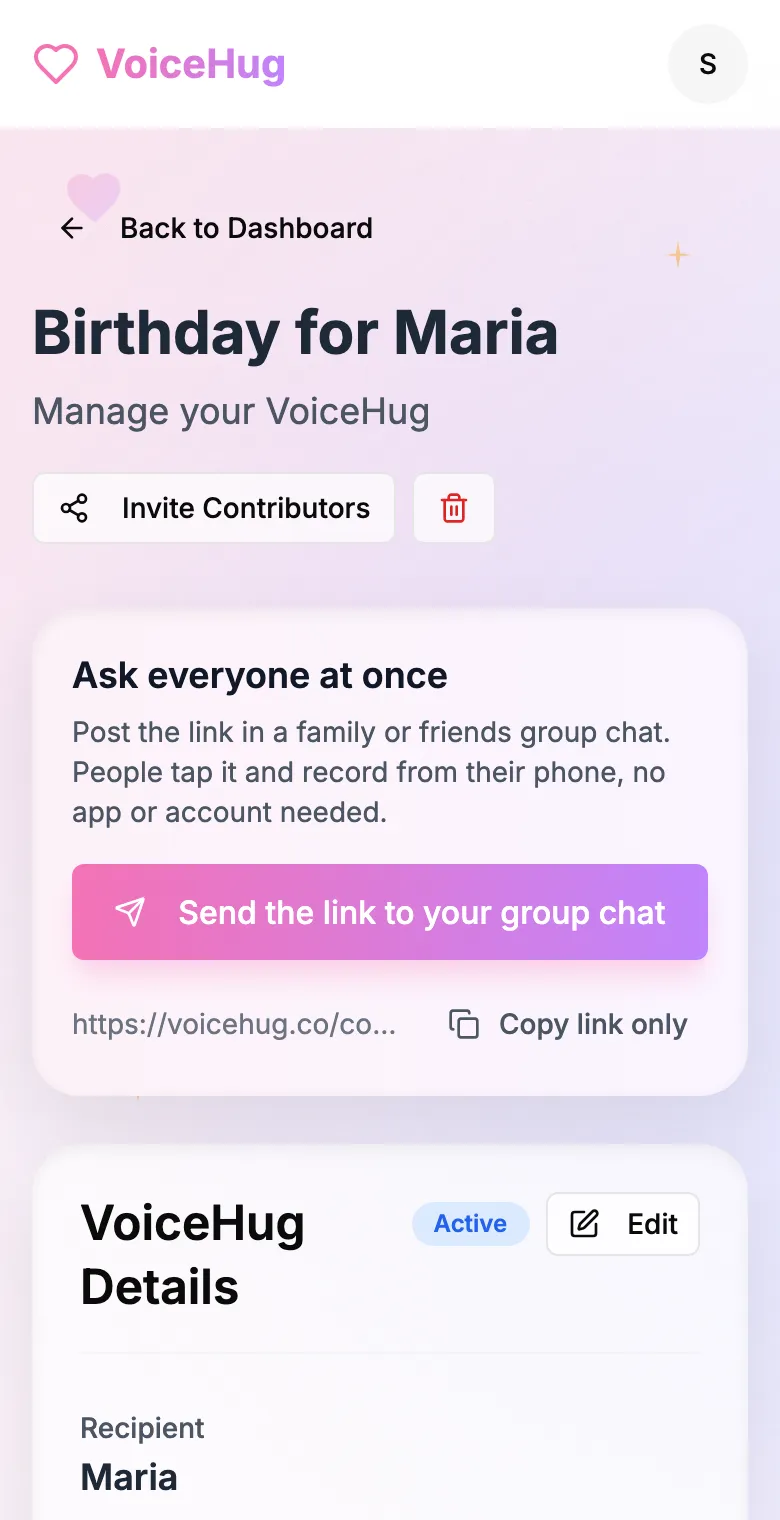
2. Send one link to the group
Post it in the family or friends group chat, or send the WhatsApp invite. You see who has recorded and can remind anyone invited by email.
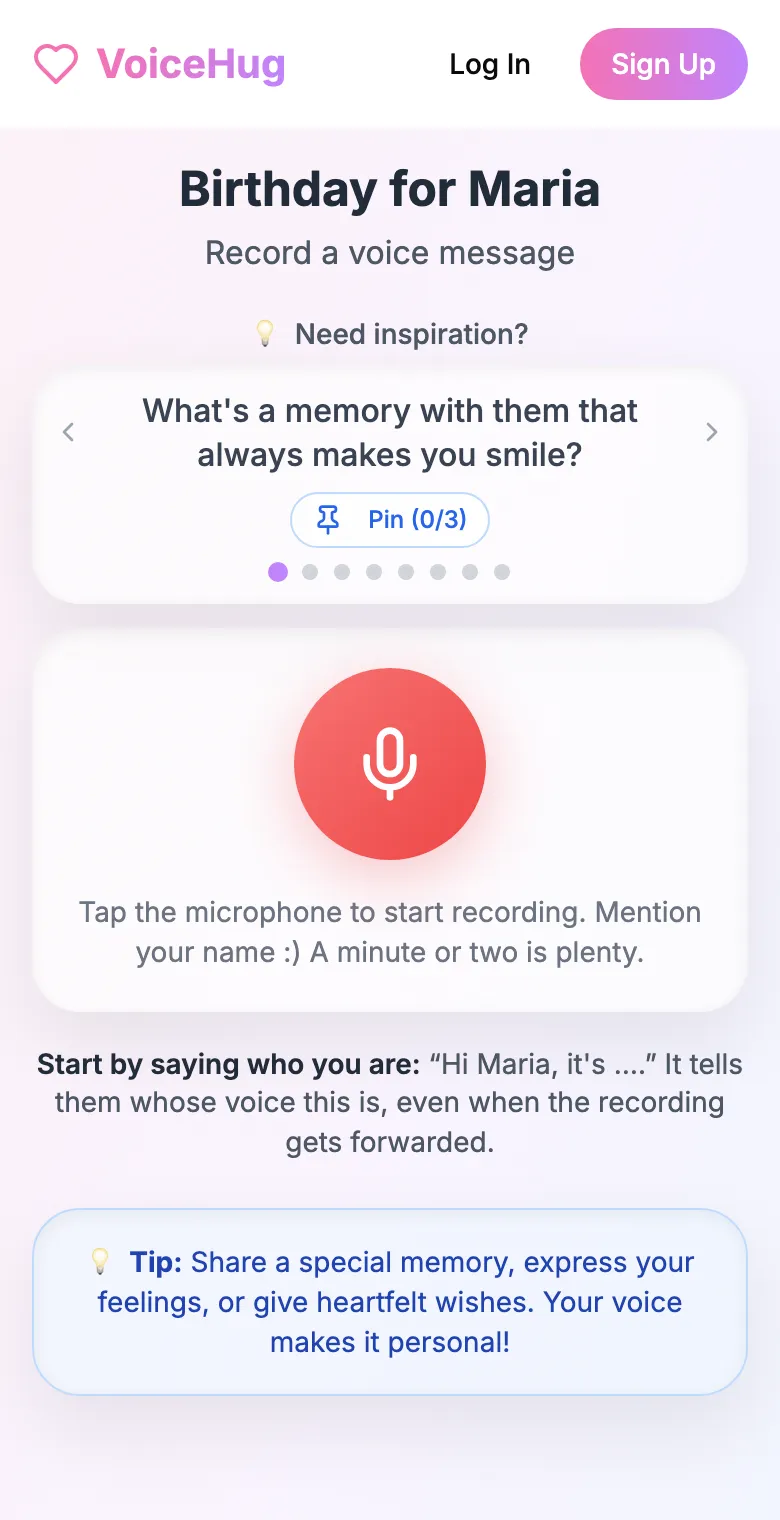
3. Each person records on their phone
They open the link and tap the microphone, with prompts if they need ideas. No app, no account. They can also send a WhatsApp voice note.
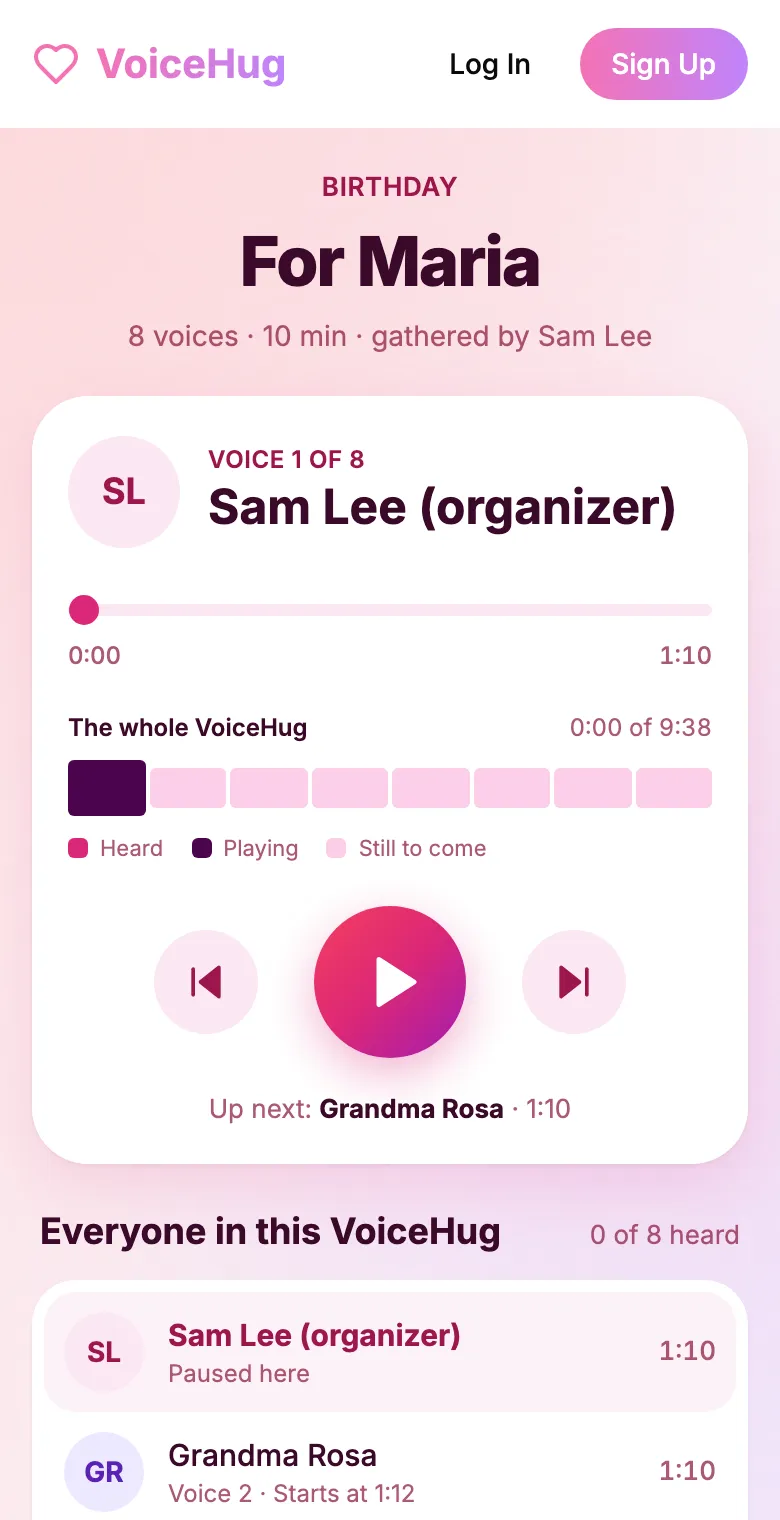
4. They get one recording
VoiceHug levels every voice, puts a short pause between them and makes one MP3 with a chapter for each person, plus a gift page to send.
Free for you and up to 5 others. $9.99 once for a larger group.
Questions
- Does a recording help someone with dementia?
- The evidence is not clear. A review of recorded messages from family found low-quality studies and could not say they work, and some people became more agitated. Treat a recording as a gift, try a short clip first and stop if it upsets them. VoiceHug does not make medical claims.
- What should you say in a recorded message for someone with dementia?
- Your name and who you are to them, then one short, happy memory or a few words about your week, in a slow, calm voice. Avoid questions and sad news.
- How long should each message be?
- Under a minute is plenty. Short clips are easier to follow, and you can always play another.
- Can a carer play it for them?
- Yes. Send the gift link or the MP3 to the carer or family member, who can play it on a phone or speaker whenever it suits.
- How much does it cost?
- Free for you plus up to 5 others (6 people). For a larger group it is a one-time $9.99, with no limit on how many people record. Contributors never pay.